
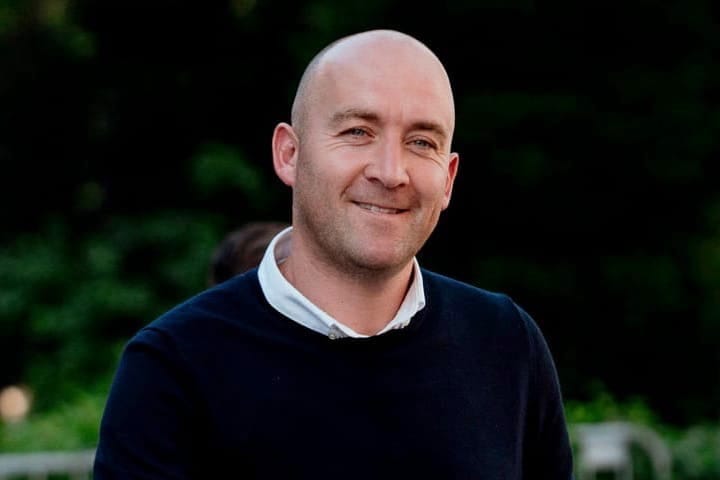
Hudson River Blue sat down with New York City FC head coach Nick Cushing at the club’s training facility ahead of Friday’s game with Columbus Crew at Citi Field.
NYCFC are 16 games into the 34-game season, and are proving to be one of the best teams in Major League Soccer this year. New York City are on a five-game wining streak, which equals a club record, and took 25 out of a possible 30 points over their last 10 games.
We asked Cushing about this current run of form, what it takes to coach young players, and why possession vs pressing isn’t the right way to look at the game. We also talked about how he first became a coach at age 18, what it’s like to work in the winning culture of City Football Group, and why he’s now dressing nicely on game days.
Note: This interview was edited for length and clarity.
An emotional start to the season
Hudson River Blue: Let’s start by talking about how things are going at New York City FC. At the start of May, you lost to Colorado 0-2 at Citi Field. At the postgame press conference, you looked completely dejected. Sometimes after a loss you can be combative, at other times you’re analytical, but that day you looked like you at a funeral.
But after that you started in on this current winning streak. That includes the games against Toronto, Philadelphia, Red Bulls. Can you take us through this emotional journey from that Colorado match at Citi Field to where we are now?
Nick Cushing: I try not to be emotional, and I try and check myself all the time. I think emotion plays a huge part in the game, and without it, it wouldn’t be the game that we all love. But as head coach you have to try and suppress emotion, and you have to to reflect and review from a higher perspective than emotion.
But I’m a human, right? And it’s difficult when you know the team’s playing well and you get a result like that.
You know, I’m also an honest guy. My frustration in that game was because I felt like we missed an opportunity there.
We had a five-day lead into the game, and it was a lot more technical than you would ever know. You guys [in the media] are privy to coming in and watching the training, but the way that we built that week’s game was different. I think we played Saturday and then Sunday, and we went for a five-day lead, and it’s very unlike us to do that. It’s very unlike me to do it. I went for it thinking that it would be positive.
But I felt like the team was a little bit flat, and a little bit lacked energy, and lacked that real freeness that we need to win football games.
The nature of that game was Colorado are very defensive, very compact. They were going to be difficult anyway. It was going to be quite a mentally taxing game. And I sent the team in not as free as I believe they needed to be.
I could see the reason straight away, and I take full responsibility for it. It became really, really disappointing, incredibly frustrating. But at the same time, I knew we had games that followed that, and it was easily fixable.
HRB: But then there were the triumphs after that. It’s hard to win in Philadelphia, it’s always hard to win in New England, it’s hard to win in Toronto, and beating the Red Bulls is always hard.
So you went from that experience of Colorado to a series of really important wins. Do you still try to go and tamp down your feelings?
NC: Um, no. There are many, many different things in those wins. Firstly, they taught us a lot about what the super-strength of our team is this year, or what is a huge attribute of ours, which is physical ability and the dynamic nature of how we play the game, which is the ability to go and be aggressive and on the front foot.
And the main part of that is freshness, mentally and physically. That answered a lot of questions for us in how we prepared the team.
As the coach, you want to go in and do everything. Everything. You want to work hard every day, but you just can’t run and run and run and run and run and teach and teach and teach. You have to know what to prioritize.
There has been some really, really, really good work going on since November of last year of how we win away and who we are away from home.
We didn’t win so many away games last year. We look at how we can improve that, and we’re trying to put that work into play. We learned a lot away in Charlotte and away in St. Louis.
Post-home stand, we knew we had the opportunity to build confidence and build momentum. And I think we managed to do that in Toronto, which gave us the opportunity to do it in Philadelphia, and then to win in New England. It gives us confidence, but LA, Nashville are going to be difficult. You know, we haven’t fixed it yet. We have to continue to work, and continue to put points on the board away from home.
Toronto allegations, MLS findings: It’s finished
HRB: Let’s go ahead and talk about that game up in Toronto. There was the actual match, which was hard fought and hard-contested, and then there was everything after. MLS issued a brief statement last week that didn’t punish you or anybody else. It also didn’t exonerate you. What is your response to that?
NC: I think I made a statement regarding it previously.
You know, you want my honest response? I think this whole situation came about from probably too much talking. So I think it’s finished, right?
I was really pleased with the level that it was elevated to. I was pleased to have an individual call with the commissioner, and was really happy with that communication. The statement went out and, you know, I think the right thing to do now is to move on.
Meeting, exceeding expectations
HRB: Last year, this team, it didn’t meet expectations when you didn’t make the playoffs. This year, the team are exceeding all expectations — this is one of the strongest first halves to the season that the club has ever had their history. What are the key factors behind this drastic of a turnaround year over year?
NC: You know, I can’t say enough about the group of players and staff that I have here, because when you taste the disappointment that we tasted last year, it is really easy to give in and it’s really easy to split.
I think it’s a great test of your culture, right? Because not everybody can see the layers underneath the outcome. The outcome was, we didn’t make the postseason. But within that, there were a lot of layers. There was some really good stuff, there was some not-so-great stuff, and there was some stuff that was okay.
Once you understand what you need to retain and where you need to improve, all you need is a group of people that have the willingness and the desire and the hunger to get there. And then as the head coach, you build a strategy that is going to accelerate that.
With a young team and a new staff, we made some changes in staff. We recruited some new players post-Leagues Cup last year. Our group looks very different, but there were also elements of last year that I did want to keep and I did want to retain, whether it be the culture or whether it be parts of the performance.
You think how we’ve changed the game. To me, the amount of work we fit in over this period is incredible. The areas of development that we’ve shown shows the willingness and the hunger of the team. And, you know, when you recruit players, you want to recruit on talent and potential. I think we’ve done that. Potential is probably the biggest area because of the age band of the team.
My experience is when you recruit good people, motivating an underperforming team is not a difficult job. Keeping a performing team hungry is a challenge.
That’s why there’s not so many winning teams out there. That’s why there are not so many teams that consistently win because that is a very unique attribute. I was really lucky to have that in my previous team. We put on nine trophies in nine years.
Now, for us here, it’s about understanding. The data the team bring me this year is we’re top of high press shots, we’re the highest xG (expected goals) away from home in counter attack. So all these stats that look great, but ultimately, the only stat that you guys and the fans care about is league position, right? But my job is to understand how to get there.
So, we’re on our way. Some will say we’re over-performing. Some will say we’re performing at the level they expect. For me, it’s just about trying to consistently perform at the highest level to win.
HRB: Back to what you were talking about in terms of what to keep and what to get rid of, what to retain. Are you talking about players and personnel, or are you talking about characteristics of the team?
NC: I think player and personnel will always be something that you have to keep one eye on, if not both eyes on. Recruitment and retention, and releasing players, is something in our organization, in our league, that’s an ongoing thing. I have a great scouting team. We have a succession plan for all of our players. It’s always been there.
Because the culture is important. If one guy checks out of the culture because maybe his eyes are somewhere else, or maybe he’s decided that he wants to go in this direction, or maybe he’s not performing at the level that he should be performing, you know, you got to keep an eye on it. Culture is really important to me, and one thing I’ve learned is, human beings can change quickly.
My job is to keep the team moving in the same direction. And we’ve seen that across the evolution of the team, right? The team doesn’t stay the team forever. You have to continue to bring in guys, and at some point guys outgrow the team and decide that they want to leave, or decide that it doesn’t match their individual goals.
That will continue to happen happened in staff as well, right? We’ve changed some of our staff. That’s natural.
I think the biggest thing for me was, How do we become a winning team quickly? We didn’t concede a lot of goals, but we have to score more. We still have to score more. For us, it’s about creating goal chances in every phase of the game. We didn’t have that last year. We didn’t have the physical ability to do that. We didn’t have the understanding, and collective hunger and desire. And I take responsibility for that.
To me, that’s a dictator of your training program. To me, that’s a dictator of what you put in, you get out. I think the acid test is doing it over time, right? You can be a great pressing team in two games, but to do it over 34 games? Because there’s a physical element to it. There’s a mental element to it. There’s an element that teams will watch you and understand you and work try and find solutions. But that’s all part of being a winning team.
Possession? Press? Score goals in less than 3 passes
HRB: You talk about being a good pressing team. It seems that pundits around the world decided that there are now two styles of play: Either you’re a possession team or a pressing team. So, either you’re Manchester City or you’re Liverpool, either you’re NYCFC or you’re Red Bulls. Is it that simple?
NC: No.
Without giving away all my secrets, I think if you want to score goals in every phase of the game, you have to have the ability to be able to play in every phase of the game. So, if we play Colorado and they’re going to sit low, we have to unlock that team.
We were 1-0 down against Charlotte in the first game. And we end up with 65 percent of the ball, but we didn’t create any goal chances. It’s the most difficult form of the game, right? 11 players in front of the goal, teams in balance. They are basically putting 70% of their focus in defending the goal and the other 30% in trying to catch you out.
So, they’re all very defensive. Now, that would lead you to believe we’re a possession team because we want the ball now. For me, it’s about when you don’t have the ball, can you be an offensive team and not a defensive team? We’ve seen the goals in counter attack. We’ve seen the goals in counter pressing moments, high pressing moments.
I think Manchester City are seen as a possession team because they have the ability to create goal chances from five to 10-pass sequences. I think you would perceive Liverpool as a high pressing team, right? Because they have all these goals from regains. But they still have 65% of the ball on average.
Now, I don’t think Manchester City are just a pressing team. I think we’re an excellent counter-pressing team and an excellent pressing team. When I say every phase of the game, I think you can still have 65% of the ball, but your goals are scored in less than three passes.
I think the art is to develop a training program that can create and educate how you create those moments because being a pressing team or being a defensive team would insinuate that you don’t want the ball. But if you have 65 percent of the ball, you’re having more possession than the other team. But how do you score your goals in less than three passes is the art of it.
Because most goals are scored in less than three passes in the game. That is about how you create that training program, and how you create the training program to adopt the physical ability and consistency to be able to do that over and over again. And I think we’ve developed that here. I don’t think we’ve created it. I don’t think we’ve got the potion. Time will tell, because there is a physical and mental element to it. We have to consistently monitor and consistently review and reflect on whether we’re achieving that.
HRB: Can you train any player to fit in that system? In England, because of the finances of that league, they can afford to bring in the personnel they feel will fit a system, and let go anybody who they feel doesn’t. It’s a little trickier in MLS. Do you have a system, and you find players to fit into that system? Or do you bring in the best players and create a system around them?
NC: I think we have one way of recruiting our players, and that is a CFG way.
It’s very much about the characteristics of the players. The type of football player he is, the technical aspect of his game, the physical aspect of the game. And then ultimately what you’re looking at is, What areas do you have to develop? What areas do you feel that you will have to upskill to get them to be the perfect player for you?
If I look at Hannes Wolff and Julián Fernández, straight away, they’re both very different, they both have very different attributes. I think what’s interesting is if you were to look at the two or three players that we have in each position, if you were to mold them together, you’d have the perfect player, right? But ultimately, that’s the nature of the league. We’re developing football players.
Well, the nature of the majority of our squad is that we have younger players, but I believe in every player. I try to develop every player that I work with because I have to work with ambitious people. I have to work with people that have a hunger to want to be better and learn, whether that’s staff or players. If you come here and you just feel like you’re seeing out your career or you’re just coming here to just play, it’s like, so boring, right? It doesn’t give me energy.
HRB: Two players who really blossomed in the last year are Matt Freese and Kevin O’Toole. Both of them are now regular starters. This team is the youngest team in the league. Do you coach young players differently than how you coach more experienced players?
NC: Yeah, I think you do. I think my answer to that would be, I coach everybody individually because I think that’s really important because there’s a lot of differences in this league.
Not just age cultures, you know, but varying experiences. So yeah, I think I do coach younger players differently, I think you have to have a different understanding of experience and knowledge. You have to have a different understanding of experiences, right?
Maxi Moralez is a completely different player to Mitja Ilenič based on the fact that he’s probably played 500 more games than him. But at the same time, I still sit with Maxi and we still work. I’m not necessarily going out and saying, Maxi, I think you need to do this. Most of the time, he’s the perfect player for our team.
But I do think you have to have a bigger bandwidth in coaching younger players. You got to expect that they’re going to have ups and downs. They’re going to make mistakes. We have an individual development plan here, a process that most of our younger players are in, which Leon [Hapgood, Cushing’s assistant coach] leads, which is an ongoing process. It’s not just on the pitch. It’s off the pitch.
It’s not just in the video room. It’s their life because we’re developing guys here, we’re developing human beings here. Jovan [Mijatović] is halfway across the world. We’re educating him on his physical well-being, his mental well-being, and also his understanding of the game. This is something that we take as really important.
HRB: You talked about Maxi. So, Maxi made one appearance for a total of 25 minutes this year. When he was on the field, he completely transformed the team. It seemed that kind of veteran presence was missing. It wasn’t just who he is as a player, but who he is as a 37-year-old who could control the tempo of a game.
Do you think that veteran presence is one of the secret ingredients that maybe the team was missing in the first half of the season when you won games but they were much closer and much harder-fought than scorelines would suggest?
NC: Yeah. Yeah, I do think that in those moments when you rely on leadership and you rely on experience, Maxi Moralez is 10 out of 10 in this area. Since the day I’ve been here, I definitely rely on or used his experience on the field.
I think that’s the case in every team in the world, all right? If you look across the best teams, you are at the mercy of the leadership on the field because you can’t fix everything. You can’t be the guy that makes every decision. You can’t always be the guy that solves the problems.
You can bridge that gap by having somebody like Maxi, who is like a coach on the field. I totally agree that you can see his ability to pick up the game and just control it, whether that be push it or slow it down. It’s experience. There is no substitute for experience in any field in the world. It is just the way it is.
 Matthew Mangam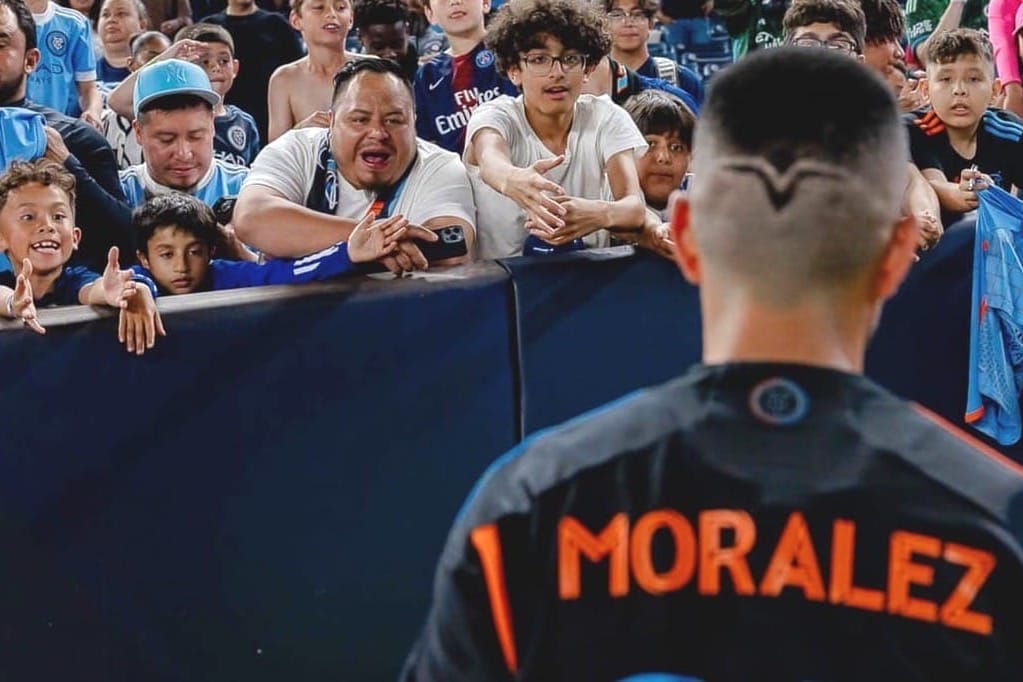
Up the Toffees
HRB: You’re from Chester, a Cathedral City with a famous zoo but that’s not known for its football. Chester City FC are no longer with us. What team do you support as a child?
NC: I have always been an Everton fan. My dad is still a season ticket holder at Everton. He’s been a season ticket holder at Everton now for 60 years, and I was a season ticket holder from three years old through till 18.
And then when I was 18, I stopped because I started to coach travel and rec soccer in England. We call it Grassroots soccer, and then I was lucky enough to get a job at Manchester City when I was 20.
HRB: I was going to ask you about that. When did you know that you wanted to be a manager? If you started that program at 18, you must have known when you were even younger.
NC: Yeah, I went to university at 18, Edge Hill University, and did sports science. And realized really quickly I was never going to be a sports scientist. I’m a very much a “do guy,” an outside guy. I’m not really a data guy. I’m not really into statistics. I’m not really, like, a theory guy. I’m more of a see it, do it, feel it type.
I knew I wanted to work in football. I spent from when I was a five-year-old all the way to 16 trying to be a football player. Like everybody, I gave it up at 16 knowing that I’d never be in a professional club. But then at 18, I decided, let’s try coaching. I really enjoyed coaching. I coached in schools, coached at Grassroots level, and then just was really lucky.
So I think I realized at 18 that I was quite good at it. I had a good communication style, and I was good with the kids, and I’ve been obsessed with the game since I can remember.
I always knew I wanted to be in the professional game. I always knew. Whether it was playing, or coaching, or even when I went to do sports science, I wanted to do something with a professional football team.
HRB: In 2008, I think, you joined Manchester City. So, you didn’t get a job at Everton.
NC: No, and I was really lucky. I was coaching a grassroots team called Vauxhall Motors. And basically, Vauxhall Motors used to be a semi-professional team. So all the boys that were released from Liverpool, Everton, United, Manchester City, they would go to Vauxhall. Similarly, the scouts would go and watch Vauxhall to see if the boys could be reintegrated, to see if they’d redeveloped. So there were a lot of scouts there.
A Manchester City scout called Terry John, who was a head coach of the five-year-olds to eight-year-olds, just approached me and said, “I like your manner. I think you’re great with the kids. Why don’t you come to Manchester and help me coach the five-to-eight-year-olds?” Sunday morning, we take all these five, six, seven, eight-year-olds, who we would perceive as the best talent in the Northwest, and we coach them. I did that for six months.
And after six months, they basically hired me full-time in recruitment. I wasn’t a scout. I was a recruitment coach to start. The scouts used to bring in players from 12 to 16 in the school holidays, and I used to coach those players, and they would either sign them or send them back to wherever they were, Germany, France, Ireland.
There were some really good players in this group as well, I could name you some top players in this group.
HRB: Let’s hear it.
NC: So we had Loris Karius, John Guidetti, top players that City ended up signing, or didn’t sign. Albert Rusnák was there, Adrien Rabiot that plays now in the France national team. All these players were coming over to City. They were trialing, and either signed or then were sent back to their clubs.
It was an amazing, amazing job because I was literally coaching the top talent around Europe.
They would come in to trial, do like five days, seven days during the school holidays and then go back to their country, and then they would come back again, and they would train a little bit, and then they would go back, and then City would either sign them or not. You see City signed a lot of these players.
The scouts were finding them in their countries, in their clubs. So they were signed for their ability. It was more they were coming to train with the team to see if it was the right time for them.
So, someone like Albert, when City signed Albert Rusnák, they knew in Slovakia that he was a top, top player. They just wanted to see what his ability was relative to Manchester City. We had Brahim Diaz, players from all over Spain. We had a really solid recruitment process at City, and that’s why we had so many academy graduates throughout those years.
HRB: Then in 2013, City Football Group assumed the control of Manchester City. That’s also when you started to coach the women’s team?
NC: So, I did a year in recruitment, and then from 2009 to 2013 I did academy teams. All my academy teams were under 9s, under 10s.
Cole Palmer was in my team. Taylor Harwood-Bellis was in my team, Tommy Doyle, who plays at Wolves, was in my team. Phil Foden was a year above, so I never actually coached Phil.
I did that for three years, and then in 2014, I went across to the women’s team.
HRB: I’m sorry, 2014. But then, but then you left the women’s team in 2019 to come here and work as an assistant with Ronny Deila. Do you miss the women’s game? Had you stayed it could have been you instead of Emma Hayes taking over the US women’s national team.
NC: Yeah, I was offered the England women’s national team in 2017, and it just wasn’t the right time for me. So I stayed with the women’s team in Manchester for another two years. I had some great battles with Emma, and I actually think they probably would still choose Emma over me. I won a bit, but she won more than me. She’s an incredible manager, top coach, great person.
Do I miss the women’s game? I watch a lot of the women’s game. I have a lot of friends that are still coaching the women’s game. I still track a lot of talent. Kiera Walsh at Barcelona, you know, Georgia Stanway at Bayern Munich. They play in the England team.
I watch the England team every week that they play. I would definitely go back and work in the women’s game. It was an incredibly challenging job. It was a really enjoyable job. It was one that I worked really hard at creating a winning team.
I think there’s only one type of person that works here at CFG, and it’s somebody that’s really hungry and really ambitious. You know, it doesn’t matter whether you are in the under 9s boys academy team, the women’s professional team, a New York City assistant, wherever you are, you have to have that real ambition and that real hunger to win.
I really enjoy that environment. Whatever position I’ve taken here has really challenged me, improved me, I’m hungry every day for it.
So when I came here, it was the natural progression to make sure I continue to develop. You know, I didn’t come here to take Ronny’s job, far from it. I also didn’t expect to be the head coach in 2022. It just happened to naturally develop that way. But for sure, when I was here as an assistant, I was here to develop into becoming a better head coach. I always wanted to be a head coach. I just knew that coming to be an assistant would enable me to continue to improve my ability to be a head coach whenever that is — in five years, ten years. It just happens to have been within two-and-a-half years.
Head coach? Or manager?
HRB: By tradition in MLS, your position is called a head coach. In England, there are head coaches and there are managers, and there’s a distinction that is drawn between the two. A manager has a vision for the club, while a head coach is in charge of the players and in charge of how the games are run. Do you see that distinction between a manager and a head coach?
NC: I think organizationally, definitely in some places the head coach is the head coach and the manager is the manager, or the sporting director. Here, I’ve always been a manager.
Whether it be the women’s team, whether it be New York City, I’ve always had full responsibility for managing the team. Whether that be selecting the team, whether that be creating the culture, whether that be the system. Things like recruitment and retention, releasing, academy, all of those things we do collectively here.
There are clear lines here. You know, I don’t go in and deal with the cap. That’s clearly David’s job. I don’t have a desire to do that, but I do have a desire to manage all aspects of the football team. And in those areas where we cross, I think it’s about a good working relationship, right?
It was Gavin Makle in the women’s team in Manchester City. It’s David Lee here. I think it’s about the types of people that we are. Do we clash and do we disagree? Of course, that’s part of it. Do we fall out and not talk? Definitely not, because that’s not going to be functional for the team, right?
So, I would say I’ve always been a manager. I don’t think I could do it any other way. I don’t think I could just do the coaching program and then be told, “Here are your players.” I just don’t think that would ever, I don’t feel that would ever be functional.
HRB: So, when we use the term head coach, because that’s the official term, you almost have to translate that in your mind, like soccer and football?
NC: I wouldn’t care wherever I work, whether they call me the manager, the head coach, or whatever. It’s more about the responsibilities and the level of decision making that you get.
I don’t feel like “head coach” minimizes my effect on the team. To me, if we win, it’s about everybody, right? It is what it is.
HRB: You’re on track to become the longest serving head coach in the history of this club.
NC: I’m the most turbulent, maybe.
HRB: Well, maybe the most exciting. No New York coaches have made it through three full seasons. And even if you make it to the end of this season, you would have to make it through another full season to accomplish that. Do you think there’s an ideal tenure for head coach?
Some people say that you should run a team for four or five years. You can build a program, implement it, and then leave before it gets stale. There are others who believe in building a legacy. What do you think?
NC: I feel like it’s right to do two contracts at a place, at least two contracts, not because you get two contracts, it’s just two periods of time to be able to build what you want to build. I come in and say, “I want this team to be like this.” I think it takes time, and in my previous job, it really took time.
I’m a guy that wants to create something. My desire is to win consistently. You know, when you win once, it’s amazing, right? And if you could only win once, please take that once. But the aim is to create something that wins over time. Because then you know that your strategy, your structure, your process, your culture is really robust.
It becomes a winning culture. You know what I mean? And what I love about this league is that it’s built to be impossible. But I don’t believe in impossible. I believe you can do it. I believe that if you get the culture right and if you get all of the different aspects of winning right, you can be greater than the rules.
I do. I believe that. And maybe that’s why we’re a young team. Maybe that age gives us longevity. And maybe we have to get over the first hurdle to then become consistent, to have a real aggressive mentality, a winning culture, a winning physical ability, be tactically really flexible, create goal chances in every phase.
But I think it’s a challenge, and the challenge is exactly what I want. The challenge is great. This is the greatest challenge, right? Can you become a consistently winning team in MLS? Well, you’ve got to win first. And then after that, you know, you see LAFC, you see Cincinnati. We did it, you know, in 2021 and 2022.
You see these teams that are chipping away at it. Is a team going to be there for two, three, four years? For me, that challenge makes me really hungry. And you can’t build that over a year. I think to build relationships and build something that becomes part of people’s lives takes time.
“My mum told me to put a collar on”
HRB: So last question, and it’s about your clothes. I assume that you saw this coming. In Miami, you brought up your sartorial game, and since then, NYCFC have taken 25 out of a possible 30 points.
Is that correlation or causation? Is your gameday fit the key to this team’s success?
NC: Maybe, I don’t think it is. But, I consciously did change. I definitely put shoes on. I have a mentor that’s really important to me that told me to take the white shoes off. He said, he hates it.
He’s a lot older than me. He’s 74. And he said to me, he doesn’t like the way the game has evolved into people wearing training shoes on the side. So he said, put a pair of shoes on. So I put shoes on. And then obviously I went with the Stone Island in Miami, and got a lot of comments off it.
I then went with a shirt, collar. My mum told me to put a collar on, so I put a collar on. And then we wore the same thing. I’ve just wore the same thing every time. And now, I’m not actually a superstitious guy, but my coaching staff, Medhi and Rob, are highly superstitious. So they won’t let us change anything.
HRB: It could be 90 degrees on Friday.
NC: Yeah. If it’s 90 degrees on Friday, then I’ll probably go with maybe a polo shirt. Okay. Maybe, maybe.
HRB: If this team advance deep into the playoffs, will we be seeing you in a blazer, or even a suit?
NC: If you look at my finals in England, when I did the league cup final, I never wore a suit. But when I did the FA Cup final, cause it was at Wembley and you went up into the Royal Box, I wore a shirt and tie. In the Campeones Cup final I wore a polo shirt.
You wouldn’t go to a wedding in training shoes and a polo shirt, right? I think you should dress with the respect the occasion deserves. And I think MLS Cup Final is a huge occasion. So I think now, if I was ever lucky enough to get there, I think I would wear a suit, shirt and tie.
HRB: Okay, so that’s a promise.


He’s our guy.
“but my coaching staff, Medhi and Rob, are highly superstitious. So they won’t let us change anything.” the best part lol. i knew it. hey HRB, thanks for a great interview piece. feel like learnt some new from that softspoken guy. also likin that he assessed the post TFC game sh*t as “from too much talking”. what a punch.